A Risky But Important Job
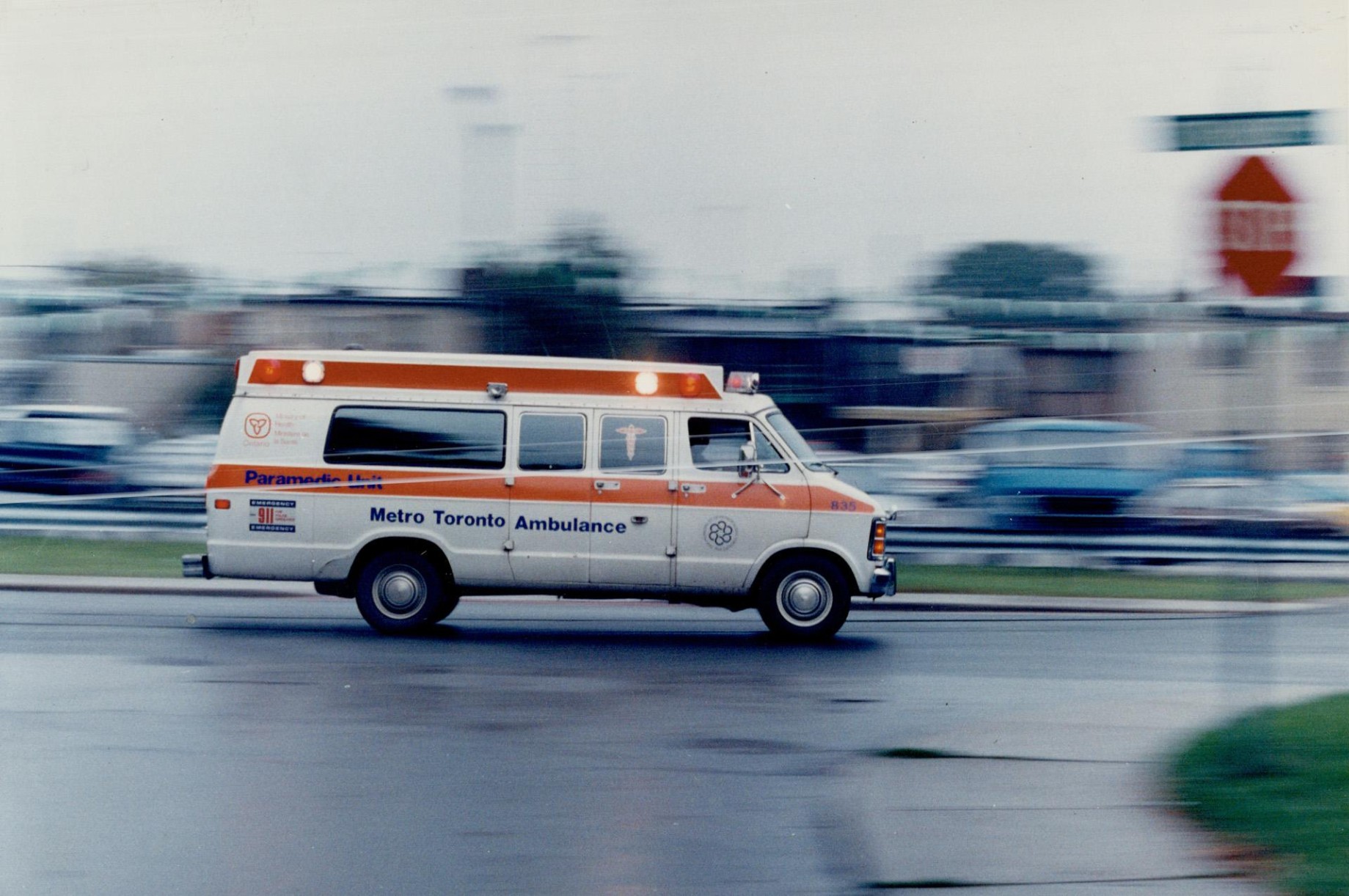
Toronto had the largest ambulance service in Ontario in terms of manpower and equipment, but in the ’70s it was the Wild West. We didn’t have portable radios. Once you got out of the van, you were on your own.
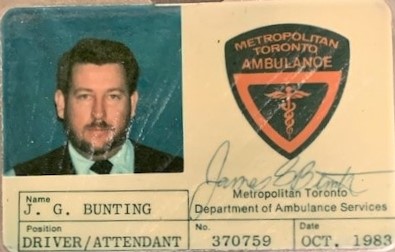
I was an ambulance worker for 10 years, starting in 1977. I was stationed at 9 Clendenan Ave., Ambulance Station #32, north of Bloor.
It was a big two-storey house, but we could only use the ground floor, where there was nothing except a few desks, a kitchen table, chairs, and a couple of vinyl couches. When the Bloor subway extension went through, the City built a new ambulance station on the same site.
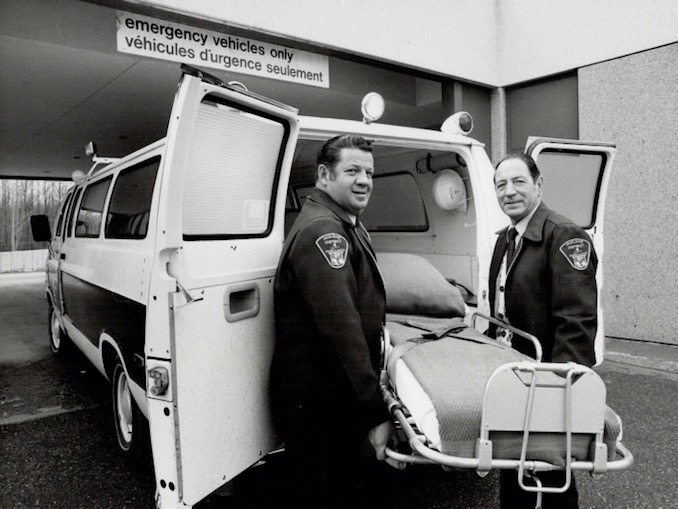
Ambulance workers were in the second-highest paying CUPE job category. The only Toronto public employees who made more money were mechanics on the diesel engines and ferry boats at Toronto’s Harbourfront. Most emergency service people weren’t there to save the world but to make a buck. It was an emotionally draining job, though, and you got hurt easily.
It was physical work
Once, my partner Randy Ivany and I were carrying a guy down an outdoor steel staircase covered in snow. The guy we were carrying had a seizure. I had his upper body and Randy had his legs. And all three of us went down 40 feet. My shoulder got caught in the railing as we were falling. I tore all the ligaments in my shoulder. Randy got a concussion. The patient wasn’t hurt at all. We used a folding stretcher that weighed 80 pounds empty. And then you put somebody on it. That’s not easy.
For our distance record, we carried a guy down 19 floors on Wellesley St. E. It was summer. Electricity was off in the whole centre of Toronto, and this guy was on home oxygen. Of course, when the electricity goes off, his oxygen system goes down, and there’s no elevator. It was close to 100 degrees in the stairwell. We were pouring with sweat.
Two Newfoundlanders and a streetcar
One night, Randy and I got a call for a guy who was hit by a streetcar at Brock and Queen. The streetcar operator told me he went 30 feet down the track before he could stop the streetcar. The guy was lying on the ground, twisting around.
Randy says, “Jerry, is that you?”
Did I mention Randy’s from Badger, Nfld.? Randy knew this guy from his hometown.
Jerry is lying there saying, “I’m okay, I’m a Newfie, I’m tough. I can get up.” Meanwhile, he has a fractured leg that goes 90 degrees at the knee.
The domestic regulars
Every ambulance station had people who called on a regular basis. Sometimes the regulars were people with marital disagreements. And sometimes these marital disagreements resulted in homicides, because when they drank, they fought. When they fought, some really fought — I mean with physical violence, with knives, guns, baseball bats. That was not uncommon.
One of our regulars was a guy who lived on Durie, who thought the television was giving him messages.
We had a guy on Runnymede who was a hypochondriac who used to call. He was on the porch with two suitcases and a portable TV, wanting to go to Centennial Hospital in Scarborough. The TV was so he wouldn’t have to pay a rental fee in the hospital. Randy handed him a subway token and said, “Dear Derek. If you want to go to Centennial, it’s a short walk down to the Runnymede subway.”
Another habitual caller from Parkdale with an alcohol addiction pretended he was having a medical problem. He said he wanted to go to Western Hospital on Bathurst St.
Miraculously, as we approached the hospital with a beer store across the street, he had a recovery.