Remembering Brockton Village Before it was Brockton Village
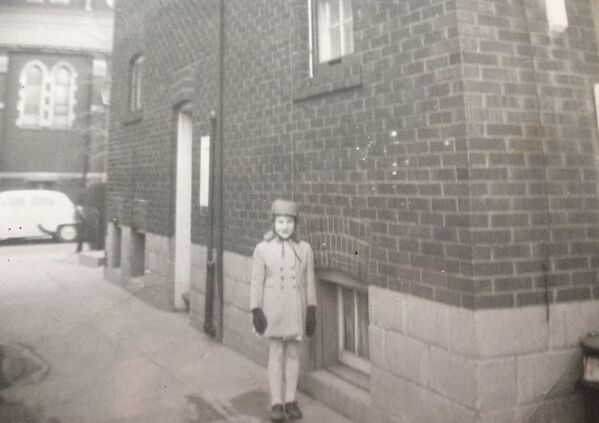
Whenever I visit Toronto, I occasionally find myself on College Street, driving past the gentrified Brockton Village, where I grew up on St. Clarens Avenue decades prior. The Brockton Village of today is up-and-coming, home to a village of Portuguese families, affordable family housing, and shabby-chic eateries. Formerly home to an aging Irish and Anglo population, post-war Eastern European immigrant groups, and low-income families barely scraping by, the neighbourhood of my childhood was busy raising a booming baby population that would, by its sheer numbers, influence all aspects of society as it aged.
Dundas and College, post-war
The formative years of my childhood took place in an area known simply as “Dundas and College.” Post-WWII, millions of couples worldwide had been reluctant to start a family — then decided en masse to have children, resulting in the baby boom. The post-war era also brought massive migration of Eastern Europeans to Canada. They were escaping communism, Nazism, and other totalitarian governments. They respected order and had two goals: to integrate and to raise successful children. For the entire time I was growing up, my life was sandwiched between modernity and the traditions of the past, which contained an undercurrent of trauma that our parents had experienced but rarely verbalized.
The Anglos and the foreigners
Once a town, Brockton was annexed to the city in 1884, occupied primarily by Irish immigrants. By 1949, when my parents moved in, it had become home to Eastern European immigrants — Jewish, Ukrainian, White Russian, Lithuanian, Polish. The neighbourhood sat at the crossroads of College and Dundas, converging on Lansdowne Avenue, and symbolically at the crossroads of two distinct cultures: the originals, whom we Ukrainians called the Anglos, and Eastern European immigrants seeking refuge after WWII. We considered Anglos mainstream and ourselves the foreigners. We coexisted peacefully, with little interest in the other.
A mosaic of tribes
My neighbourhood was a mosaic of different tribes. Anglo single moms and Jamaican families lived in the tenements; Eastern European immigrants moved into newly built semi-detached housing on streets lined with detached houses occupied mainly by older Irish/Anglo residents. There was also the Lansdowne Hotel and Tavern, which rented rooms to itinerant workers and “miscreants and vagrants.” The Portuguese had not yet arrived in visible numbers — it wasn’t until 1965 that their vibrantly coloured facades had grown sufficiently to signal a foothold south of Dundas Street.
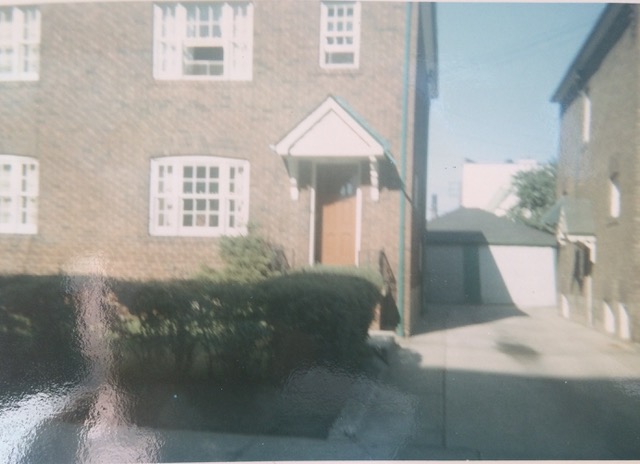
116 St. Clarens
My parents bought 116 St. Clarens Avenue in 1949 for $5,000 — scraping together a down payment and taking out a mortgage for the rest. The average full-time wage then was $3,300 a year.