The Washi Queen of Toronto
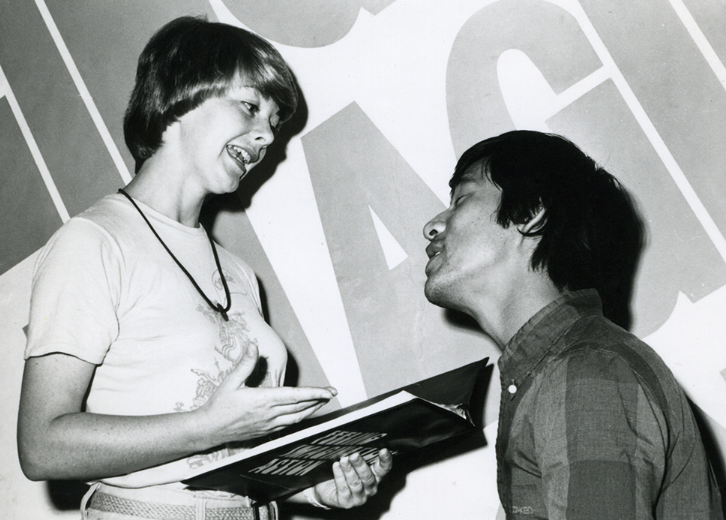
She was smitten by the traditional arts of Kyoto — especially washi, Japanese handmade paper made from mulberry tree fibres, using mountain spring water and the expertise of family artisans who have crafted it since the 1400s. There are thousands of types — some sheets natural, some textured, others hand-stencilled with colourful traditional motifs such as cranes and chrysanthemums.
Getting started wasn’t easy for a woman
When Jacobi started importing washi in 1978, it was first of interest to bookbinders and printmakers. But getting started wasn’t easy. In those days, banks would not loan a penny to a single woman, so her father Bill had to guarantee her loan.
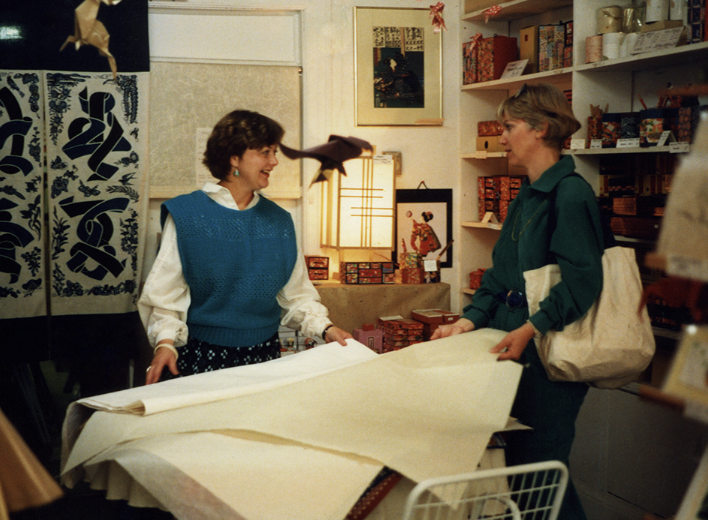
She rented a store on Queen West, and in 1982 the Japanese Paper Place was born.
It quickly became a mecca for artists and artisans who valued washi for works on paper and crafts such as origami. In 1985 came a big break — the Cape Dorset studio placed an order. Cape Dorset had long used Japanese paper for printmaking, and when their New York supplier fell through, they turned to the JPP. Jacobi has supplied washi to Inuit artists ever since.
A fire destroyed the original store
Disaster struck in 1993 when a suspicious fire destroyed the store. Jacobi moved the shop to 887 Queen West and kept going, travelling to foreign gift shows, lecturing wherever she could — including at the Metropolitan Museum of Art in New York.
Her tireless promotion did not go unnoticed. On June 23, 2021, the Japanese government honoured Jacobi at a Toronto dinner, with Consul-General Sasayama Takuya commending her contribution to promoting friendship between Japan and Canada and her support of Japanese culture through the Japanese Paper Place.
In 2005, Jacobi handed over the Queen West retail store to a former staff member, Heather Sauer, who renamed it The Paper Place. It continues at 887 Queen West today.
The Japanese Paper Place shifted its focus to wholesaling and now operates out of a warehouse in Etobicoke, which features an art gallery and mountains of exquisite papers, shipping washi retail and wholesale to merchants and art conservators worldwide.
Today, washi is produced by only a handful of artisans in Japan — down from 80,000 families in the 1800s to around 250 remaining studios.
Jacobi is philosophical: “Looking back over my 45 years of washi, my greatest pleasure continues to be introducing artists to these sustainable papers that have been made for 1400 years. That and helping to keep the papermakers going against all odds.”
As of June 2021, she stepped back from daily operations to the role of founder, with her stepdaughter, Tara Moore-Jones, taking over as President. Jacobi is now working on a book about the use of washi.