The Holy Trinity of the Aunts
Jerome McNicholl, West End Toronto artist, describes his Irish Catholic upbringing as “managing to grab a piece of everybody on the way up.”
Back then, in the 1940s, you took your sustenance, love and direction from whoever was at hand to give it. Lucky for him, he had three aunts who were ready to devote themselves.
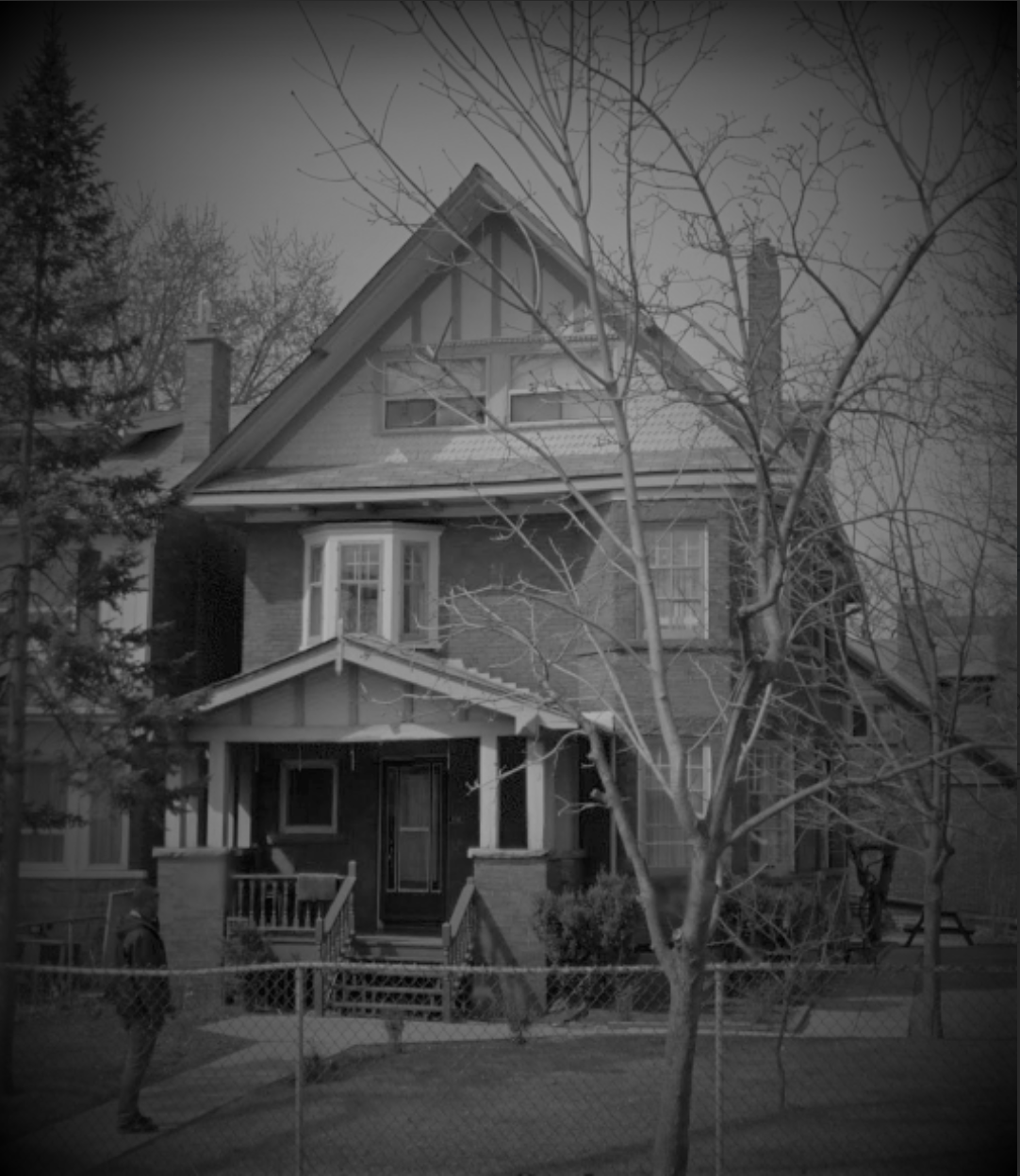
Kathleen, Regina and Lillian McNicholl lived at 202 High Park Ave., the large turreted house on the corner of High Park Avenue and Humberside. In those days, women who were unmarried stuck together and, just to be safe, they stuck to God too.
Jerome’s mother, who had difficult births with his sisters, sent him for months at a time to be taken care of by the aunts. He was four years old when he first went to live with them and, like a little prince, they worshipped their temporary boy — almost as much as they worshipped the Virgin Mary.
A world away
“It was a world full of women,” Jerome remembers, without the usual confrontations of men. In this world, he was seen and heard.
The aunts’ house had a seminary air to it, full of books, monastic living and rosary prayer. They took their comfort in God, books on art and history, and a well-kept house.
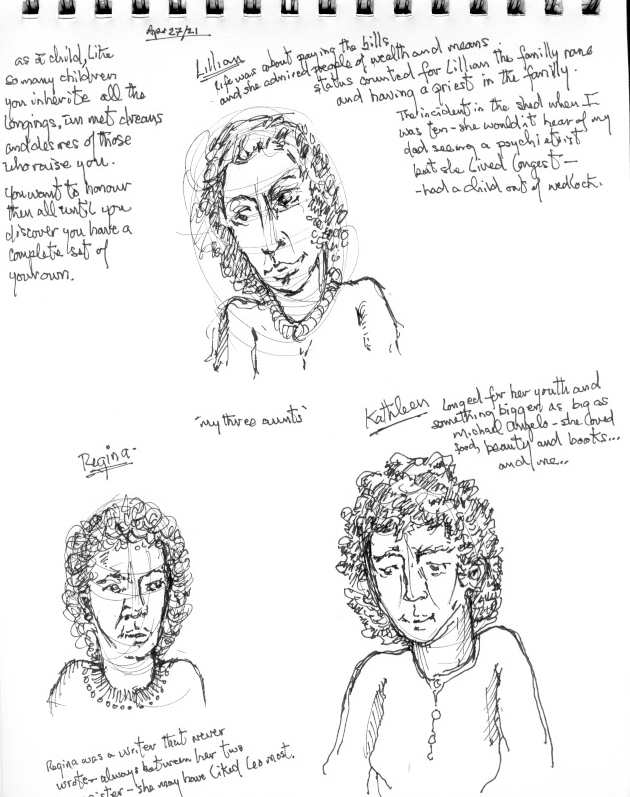
Not especially striking, nor particularly beautiful, the aunts simply “looked like who they were.” Kathleen, the eldest, with curly auburn hair, exuded a Buddha-like warmth — someone who, “when you looked at her, you just wanted to talk to her.” Jerome knew her as “Aunt Kay” and they were each other’s favourite people.
In the middle was Regina, the quietest of queens, almost ghostly in her reservedness. She kept her own company and her own nun-like room, which, although modest, afforded her the solace she needed from the world and from her dominant sisters. Her personality was harder to place for young Jerome. He often remembers the aunts as being “not of themselves” — more mysterious, as if they were made “only of God.”
Kathleen and Lillian shared a room and, like repelling ends of a magnet, they kept the house spinning.
Three sisters, three chairs
Although muted beiges and greens reigned supreme amongst the living-room furnishings, the women added their own colour to the scene. Each sister had her ordained place.
Regina sat next to the window, facing into the room in her wingback chair, nursing a tome as big as her lap, lost in space, contemplating a more divine matter.
Kathleen sat in the far right corner exuding strength and stability, like the pillar of the home that she was — from there she could observe the whole room and, more importantly, keep an eye on both her sisters.
And then there was Lillian, always on the large couch by the bay window with her two black-and-white terriers on guard. Unlike Regina, she would be perusing a more lightweight magazine, occasionally glancing up to watch the stream of life go by outside.
Lillian was the youngest and, with her straight blonde hair, she was assertive and quick. She was the breadwinner for the house, having worked as a bookkeeper for Maclean’s magazine for many years. When she retired, she immodestly regaled her family with stories of how much her colleagues had praised her work.
The family secret
Lillian had secrets, and the family helped her keep them. When her belly grew and grew, the tale was that she’d eaten too much of Kathleen’s bread and had to “have an operation.” Unlike the Virgin Mary, her baby disappeared almost as magically as it came into being. How that tale ended, only history and Lillian know.
At 28, Jerome visited Kathleen on her deathbed. She died young, in her early fifties, as did Regina, with Lillian outliving them both. At the wake, Kathleen’s will was read aloud. She had left Jerome a cottage in Havelock. But Lillian never honoured that wish and transferred it into her own name.
Permission to be an artist
Beyond worldly possessions, though, Kathleen gave Jerome permission to be an artist — away from the world of men and Irish expectations. He remembered “art all over the walls, like being born into a Renaissance painting.” When he painted his own work, Kathleen was the one who thought to frame it and hang it on the wall.
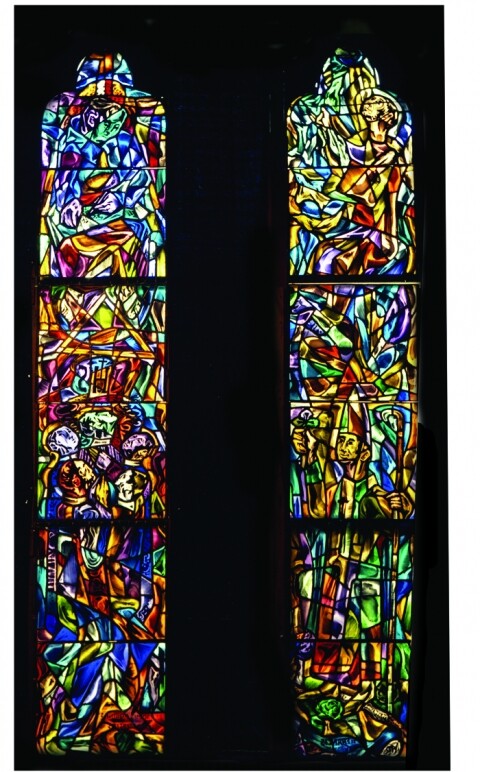
In adulthood, his art became a language for him to deal with himself, his religious upbringing and his yearning for spirituality in the world. He spent three years in the North Toronto studios of the stained-glass artist Yvonne Williams creating 18 stained glass windows depicting the Passion and Death of Jesus Christ. They now adorn St. Patrick’s Church in St. John’s, Newfoundland.
His art has also become a pilgrimage back to his aunts — to those saints who took him, without question, into their house of secrets and devotion. Into the holy trinity of the Aunts.