A Doctor, a Horse and a Vaccine
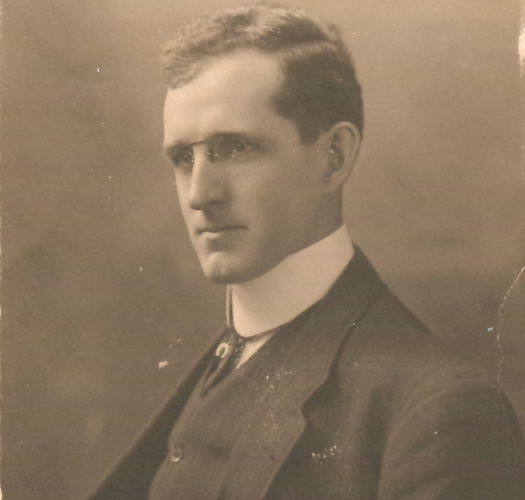
My grandfather bought a mare named Crestfallen in 1913 for $3. Named for her sad eyes, she played a key role in developing vaccines and creating Canada’s public health system.
Back in the early 20th century, Canada was mired in a public health crisis with disease running rampant against a backdrop of political inertia. Diphtheria was the single greatest killer of children, and the exorbitant cost of imported American medicines left the poor to suffer.
My grandfather Dr. John (Gerry) FitzGerald decided to do what he could to combat the disease. Earlier that year, Gerry had made an impassioned pitch to the University of Toronto to back his vision for making a diphtheria antitoxin and distributing it free to Canadians. But the university needed time to consider the unprecedented proposal, so Gerry forged ahead on his own.
Making medical history
Gerry installed Crestfallen and three other aging horses, rescued from the glue factory, in a two-storey stable on a lot beside an associate’s home at 145 Barton. He used $3,000 from his wife Edna’s dowry to build the metal-clad structure and equip it with a lab.
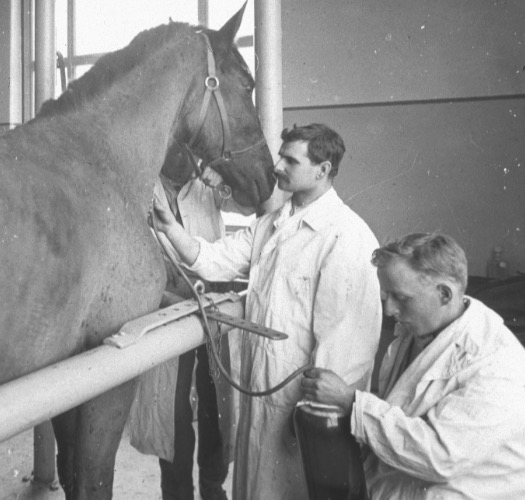
On Dec. 11, 1913, two days after his 31st birthday, Gerry injected a minute but deadly dose of diphtheria germ into Crestfallen’s neck. Her immune system began forming the antibodies to neutralize the disease’s toxins.
After four months of incremental injections into all of the horses, he extracted their immunized blood, processed it and proved that the resulting “anti-toxin” worked, first in guinea pigs, then in humans. Orders poured in from across Canada.
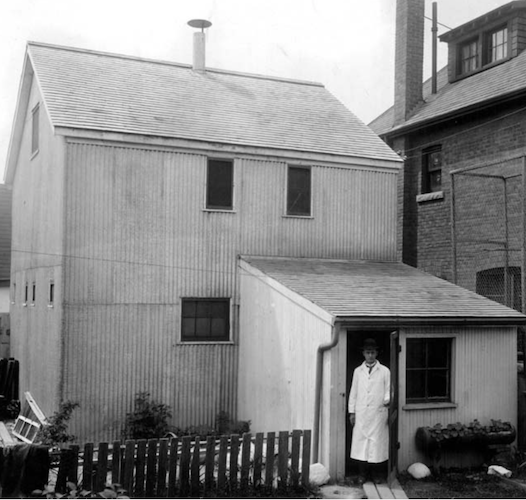
On May 1, 1914, the Anti-Toxin Laboratories, later renamed Connaught Laboratories, were established in U of T’s Department of Hygiene. My grandfather’s inspired vision was transforming Canada’s public health system into a world leader.
Vaccine work grew and by 1916 a larger facility was built at 1755 Steeles Ave. W. The site is now owned by pharmaceutical giant Sanofi Pasteur, which acquired Connaught assets in 2004. The Barton Ave. stable was moved there and restored.
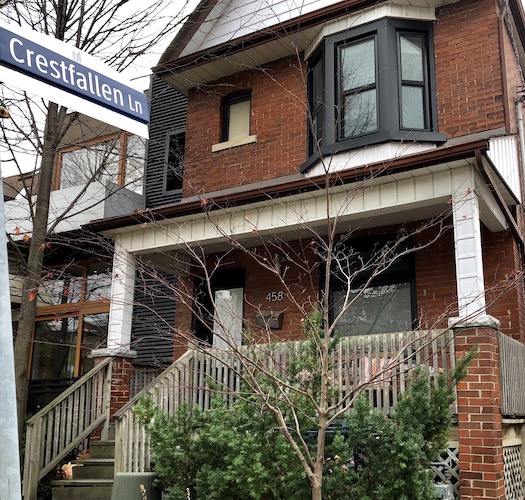
If you visit it or when you walk along Crestfallen Lane, think about the horse that helped my grandfather achieve a “miracle in a stable.”
Toronto City Council approved the naming of the lane after the horse back in 2014, following recommendations from the community.
This story is an excerpt from James FitzGerald’s book What Disturbs Our Blood, published in 2010 by Vintage Canada.