Tap Dancing Around Town
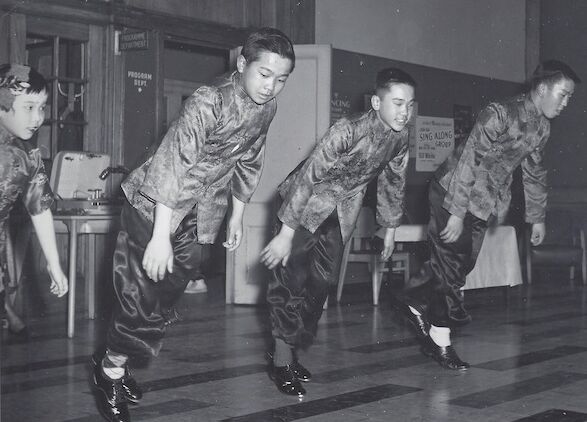
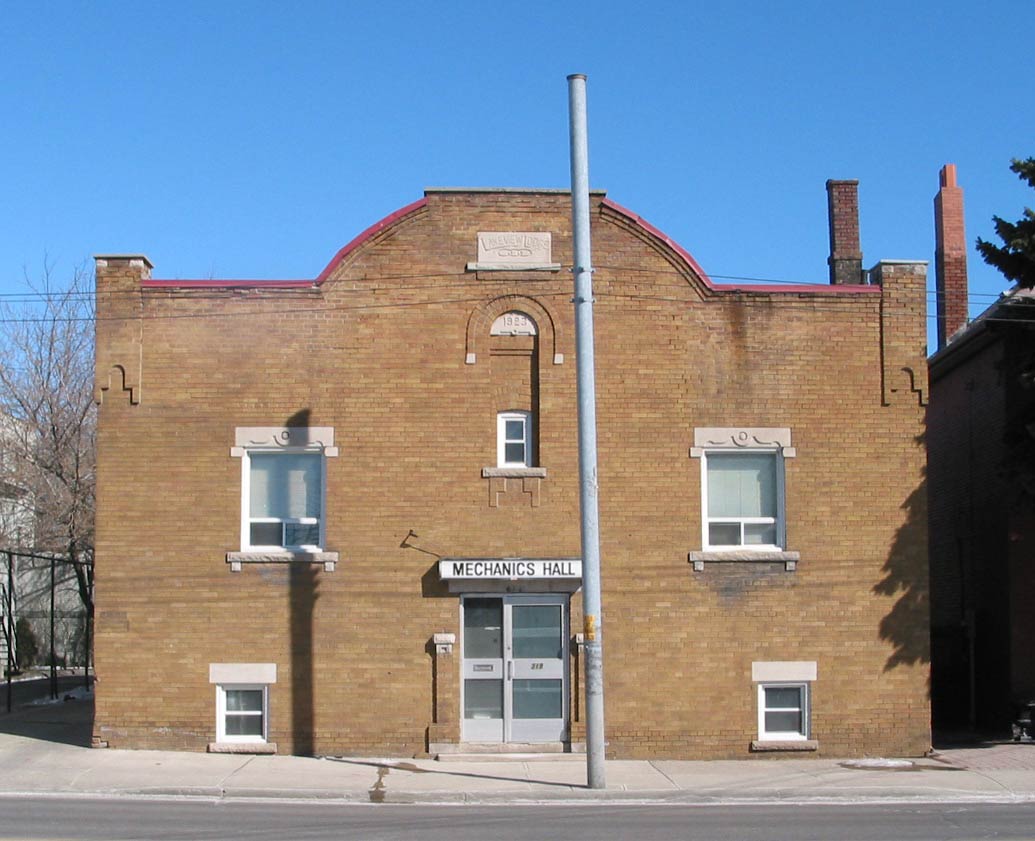
All of us used to go to the Mechanics Hall (319 Keele St.) for Phyllis Hancock’s tap-dancing lessons. She choreographed many performance numbers for the six of us, dances that we took to the stages of the infamous Casino (87 Queen St. W.) and Victory Theatres (287 Spadina Ave.) in the ’60s. I must explain that during the days of the Lord’s Day Act, businesses were shuttered on Sundays. These burlesque theatres were rented by the Chinese community for Cantonese opera performances, Chinese films and community events that often featured the Lumb family dance numbers.
Arlene Chan is the daughter of Jean Lumb, the celebrated Toronto restaurateur, community activist and first Chinese-Canadian woman to receive the Order of Canada. Jean and her husband Doyle Lumb raised their six children, first in the Junction above a fruit market and then in Toronto’s original Chinatown.
Jean founded a Chinese community dance troupe that became a fixture of Toronto’s cultural life in the 1950s and 1960s. The Lumb children played a part, growing up performing both classical Chinese dance and Western styles at fundraisers, parades and cultural events across the city.
Chan went on to become an author and historian of Chinese-Canadian life. She has written seven books documenting the history, culture and traditions of Chinese people in Canada. Her childhood memories of performing in Toronto’s west end are part of that story.
Because the Lord’s Day Act prohibited commercial entertainment on Sundays, theatres, including the burlesque stages, sat idle one day a week. The Chinese community rented them on those days replacing strip shows with Cantonese opera performances, Chinese films and community events. These unlikely cultural gathering places gave the Lumb family dance numbers some of their most memorable audiences.
Two Halls, One Block
The Mechanics Hall at 319 Keele St. — also known as Lakeview Lodge — was built in 1923. It was originally one of the few African-Canadian working men’s Mechanics Institutes in the city, at a time when Black Canadians were segregated from large aspects of community life.
Modelled on educational institutes and Masonic Temples, Mechanics Institutes were common across English-speaking countries, providing opportunities for working men to read and study. The CPR actively recruited in the West Indies for porters, and the Grand Trunk recruited in the United States for cooks and waiters — and the men who came to Toronto needed places of their own. (Information from the West Bend Community Association.)
At 323 Keele St., steps from the Mechanics Institute, another hall left its own mark on the city. Ascot Hall, at the corner of Keele and Annette, became one of Toronto’s most significant blues venues in the late 1950s and early 1960s — described by one music writer as likely the first venue in Toronto to feature American blues performers. Sonny Terry and Brownie McGhee, John Lee Hooker and Jimmy Reed all played there. (Information from the blog https://strathdee.wordpress.com/about/)