Salon of the Dispossessed on Hewitt Ave.
A big three-storey brick Edwardian house at 64 Hewitt Ave. became our new home in 1956 — not because our fortunes had improved, but because it was big enough to rent out the second floor and the two bedrooms in the attic for income, to try and make ends meet. Or if not meet, at least approach each other.
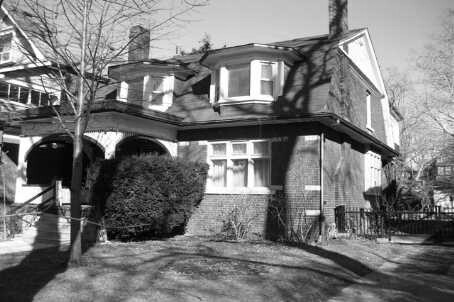
I was 6 years old. My Ukrainian family was the flotsam of ruined, desolate Europe, bounced around from bombed out cities to refugee camps in Germany to DP camps in England to sponsors willing to vouch for them in Winnipeg and then onwards to Toronto. I was Canadian by birth, whereas the rest of my family had to be “naturalized,” a word that underscored just how foreign, how different, how “unnatural” they must be.
Russian tanks had just clanked across the cobblestones of Budapest, and we had watched it happen in black and white on our television, a device that my father had insisted we buy, despite the cost, as it provided a window on global events in nearly real time.
A parade of personalities passed through
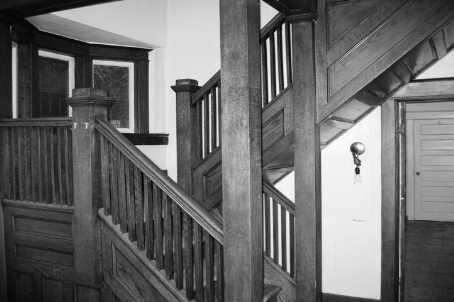
An Estonian general in an ancient double-breasted suit arrives, lapels frayed, rows of medals stippled across his chest, clutching three roses, embarrassed it’s not a dozen, grateful for being invited to an Eastern European “salon” where tales of before the war, when he had significance, lighten his despair.
Polish professors come by, laying claim to unverifiable PhDs, spinning tales about tenure and before-the-Nazis-Warsaw.
Ukrainian “intelligentsia” filter in, twice dispossessed, first by the Russians, then by the Germans, debating the significance of the invasion of Hungary, unrolling all that summer and early fall. What does this mean for Eastern Europe? Will President Eisenhower act? What might he do? What CAN he do? Will the Iron Curtain fall, or be reinforced?
Politics and history are the ever-present undercurrent, the always welcome topics of conversation, so much better than the gritty realities of how many jobs are you holding down to pay the rent? When did even boiling fowl become so expensive? Where can I find a second-hand clothing shop, and do they have shoes?
The men talked of politics and history and culture.
The women talked about those gritty realities, the ones they had to face every day to keep their families sheltered, and clothed, and fed.
Europe is still a wounded animal, dragging its mangled self towards an unknowable future. Rationing has only just ended in England. Berlin, divided between East and West, is hobbled. Sometimes the past is the only life raft available.
The war defined everything
Everyone’s life, or at least everyone’s life who comes to that house, is defined by three periods: Before The War, During The War, After The War.
BTW is always Elysian, memories of perfection drenched in the vigour of youth. Trips to uncles who owned farms, summers spent swimming in crystalline rivers, picnics and parties and the joyfulness of privileged youth who assumed their lives would unfold favourably, successfully, comfortably, and with reasonable but not undue effort.
DTW is dire and desperate, early promises torn to shreds, their youthful dreams squeezed out between advancing armies like toothpaste spurting from a tube.
ATW is relentlessly grim and grinding, horizons filled with impossible ambitions.
My father clung to his dreams of a film production company, an arts magazine about Eastern European artists and writers, a documentary production company, all failed. Finally……surrender, first to despair, then to brandy.
So 64 Hewitt was a temporary home, a business of sublet rentals and a lifeboat for families even more diminished than my own. And ultimately, it was just a brief waystation. The next summer, it’s 1957. I’m 7 years old, and it’s time to move again.